
- Dee Agarwal shares how mentoring young professionals reshaped his views on leadership, purpose, and long-term career success.
ATLANTA, GA, July 7th, 2026, ZEX PR WIRE — Most people think mentoring is about passing knowledge down.
An experienced executive shares lessons learned, helps younger professionals avoid common mistakes, and offers guidance on navigating a career. The assumption is that wisdom flows in one direction.
But after years of mentoring young professionals, entrepreneur and business leader Dee Agarwal has come to a different conclusion. Some of the most important lessons he’s learned about leadership, ambition, and long-term success have come from the people seeking his advice.
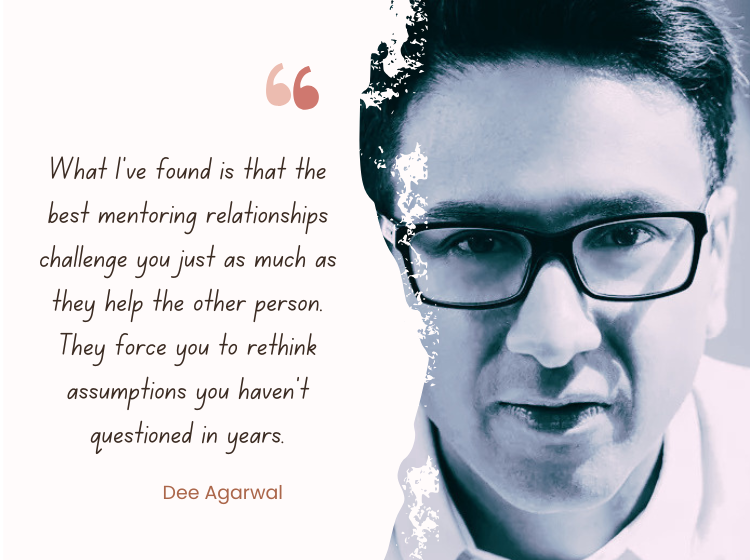
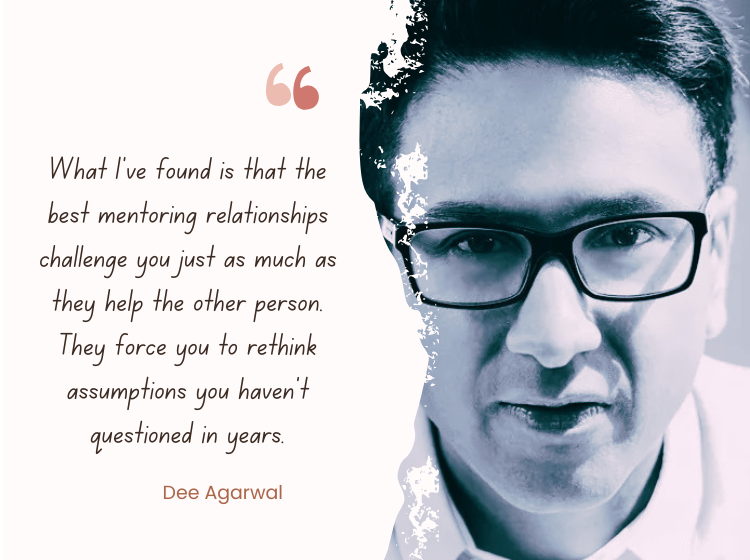
“People often view mentoring as teaching,” Dee Agarwal says. “What I’ve found is that the best mentoring relationships challenge you just as much as they help the other person. They force you to rethink assumptions you haven’t questioned in years.”
For much of his career, success was measured the same way it is for many business leaders: goals achieved, milestones reached, and opportunities created. Like countless professionals, he spent years focused on execution, strategy, and the next objective.
That’s not necessarily a flaw. Businesses need goals. Careers require direction. Results matter.
But mentoring younger professionals has repeatedly pushed him to ask a question that doesn’t fit neatly into a quarterly review: What are all those accomplishments ultimately building toward?
“When you’re early in your career, you spend a lot of time looking ahead,” Dee Agarwal says. “You want the promotion. You want the next opportunity. You want to prove yourself. At some point, though, you realize success isn’t just about moving forward. It’s about making sure you’re moving in the right direction.”
One of the most striking differences he’s observed among younger professionals is the way they think about the relationship between work and life.
Previous generations often viewed career progression as the primary objective, with personal fulfillment expected to follow. Many young professionals today begin with a different question. They want meaningful work, certainly, but they also want to understand how that work fits into a broader vision for their lives.
To some observers, that mindset can be interpreted as a lack of ambition. Dee Agarwal sees it differently.
“I think they’re asking smarter questions earlier,” he says. “They’re thinking about purpose, flexibility, and long-term fulfillment much sooner than many people in my generation did.”
Those conversations have prompted him to revisit some of the assumptions that shaped his own career. Looking back, he recognizes that there were periods when he was so focused on execution that he rarely paused to evaluate whether his definition of success had evolved.
Like many high achievers, he was skilled at setting goals. Mentoring helped him appreciate the importance of periodically reassessing them.
“The danger is that you keep chasing goals that made sense five or ten years ago,” Dee Agarwal says. “If you’re not careful, your career can end up running on momentum rather than intention.”
That realization has influenced not only how he thinks about success but also how he approaches leadership.
Many young professionals entered the workforce during periods of significant economic, technological, and cultural change. As a result, they often demonstrate a comfort with uncertainty that older generations sometimes underestimate.
Rather than viewing change as a disruption to be managed, many see it as a normal condition of modern work.
“There’s a level of adaptability that’s impressive,” Dee Agarwal says. “They understand that careers aren’t straight lines anymore. The ability to learn, adjust, and reinvent yourself has become just as important as expertise.”
Observing that mindset has reinforced something he believes applies at every stage of a career: professional growth requires intellectual flexibility.
Experience is valuable, but experience can also create blind spots. The longer people operate within a particular framework, the easier it becomes to mistake familiarity for certainty.
Mentoring creates a natural antidote to that tendency.
“When someone asks a question you’ve never considered, it forces you to think differently,” Dee Agarwal says. “That’s one of the most valuable things about working with younger professionals. They aren’t burdened by the assumption that something has to be done a certain way simply because that’s how it’s always been done.”
Perhaps most importantly, mentoring has reminded him that learning is not tied to age or job title.
In many organizations, professional development is treated as something that primarily benefits younger employees. Dee Agarwal believes that perspective misses the broader value of the relationship.
The most effective mentors aren’t simply transferring knowledge. They’re staying engaged with new ideas, new perspectives, and new ways of thinking.
“The best leaders remain curious,” he says. “The moment you think you’ve figured everything out is usually the moment your growth starts slowing down.”
For Dee Agarwal, that may be the most unexpected lesson of all.
The young professionals he set out to mentor have helped him become more reflective about his own journey. They’ve encouraged him to think beyond immediate objectives, question assumptions that once seemed obvious, and redefine success in ways that extend beyond traditional career milestones.
In a business culture that often celebrates constant forward motion, mentoring has provided something increasingly rare: an opportunity to pause, reflect, and ask whether the destination still matches the ambition.
Sometimes the most valuable career advice comes from an unexpected source. Not from someone who has already traveled the road, but from someone just beginning the journey and willing to ask questions others stopped asking long ago.
The Post What Mentoring Young Professionals Taught Dee Agarwal About His Own Career first appeared on ZEX PR Wire
